
Before the Oven
Long before Tinapay Atbp became known for Filipino breads, its founders were learning how to build something from almost nothing—selling yema, repacking peanuts, finding opportunity in a shortage of ice and running a printing business while holding full-time jobs.
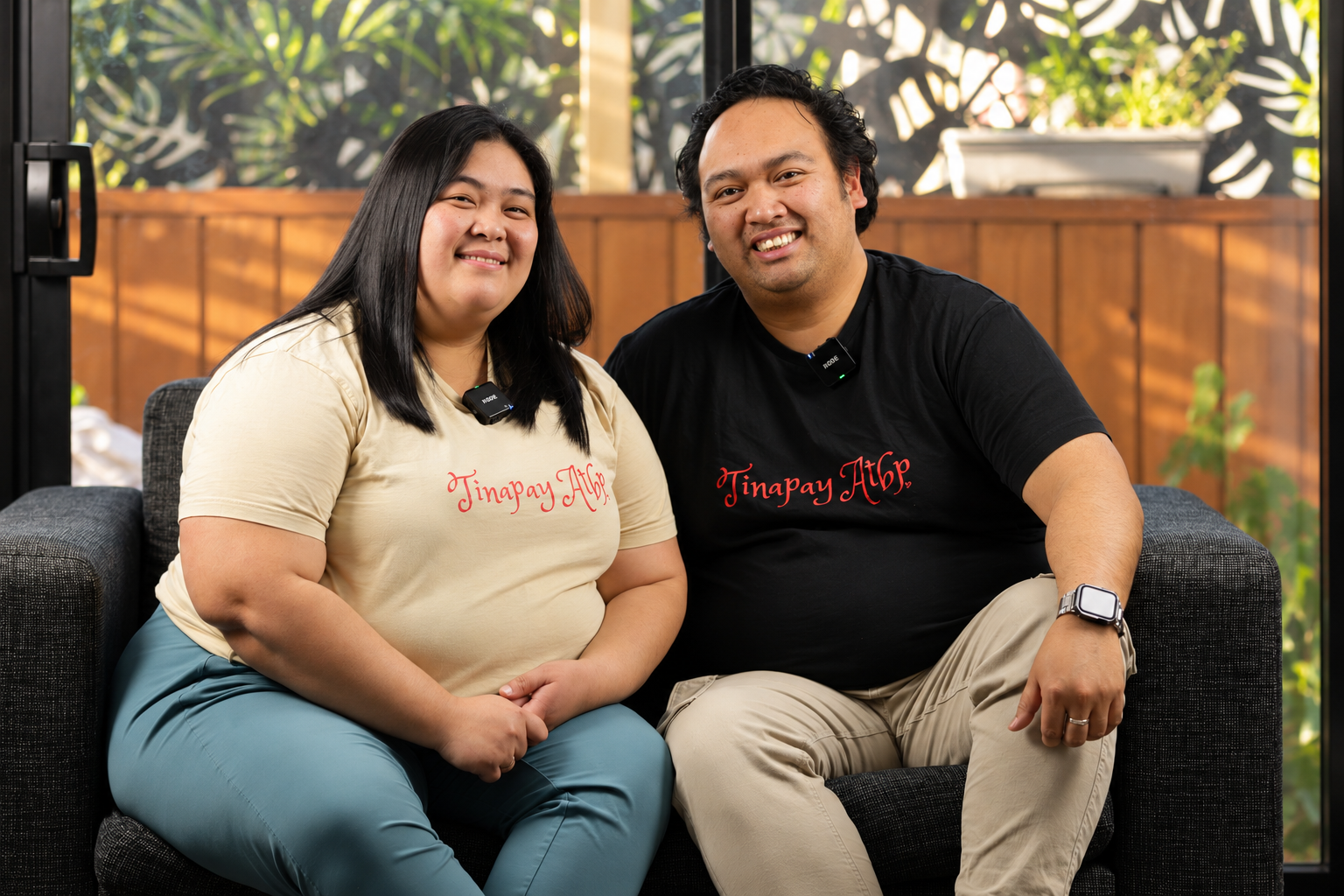
The first lessons did not come from a bakery.
They came from a sari-sari store in Cagayan de Oro, from sweets sold to neighbours and classmates, and from the practical question familiar to many Filipino students: how do you pay for tuition, research and your own baon?
For one of the founders of Tinapay Atbp, the answer was to start selling.
“Nagbebenta ako ng mga yema sa mga kapitbahay, at sa mga classmates ko.”
At university, that instinct became a necessity. She and her partner repacked salted and coated peanuts to sell. When small, affordable portions of ice were difficult to find, they saw another opening and supplied those too.
None of it looked like the beginning of a Filipino bread business in New Zealand. But the habits were already forming: notice what people need, begin with what is available and keep working while the venture grows.
Two Paths Towards Business
The founders arrived at entrepreneurship from different directions.
One initially imagined a future in mechanical and automotive work. After studying accountancy for a year, he shifted to Marketing Management and later found employment with a mining company.
The work left a strong visual memory. Inside the site were the miners and machinery; beyond it was greenery, maintained as part of the company’s environmental responsibility.
Yet migration was not part of his plan.
“I never happened to dream of going outside of the country,” he says. Living abroad did not appeal to him. Travel did. He wanted holidays, movement and the chance to explore—but not necessarily a new home.
His partner grew up in Cagayan de Oro with business already present in everyday life. Her family operated a sari-sari store, and the stories of her selling yema as a child suggested that enterprise came naturally, even before she recognised it in herself.
She also began in accountancy before deciding it was not the right fit and moving into Business Management. Later, she worked in sales.
The couple’s small college ventures eventually led to a more established operation: a printing business offering T-shirt and identification-card printing.
They did not wait for the business to replace employment. They built both at the same time. She worked as a university lecturer. He worked in sales. Their entrepreneurial life happened around the responsibilities of their full-time jobs.
When Opportunity Knocked
New Zealand entered the story unexpectedly.
Someone invited them to meet an immigration adviser—not with a fixed plan, but simply to understand what might be possible.
The idea did not immediately excite them. Their lives in the Philippines were stable, and neither had built a dream around migration.
For her, the hesitation was especially personal. As an only child, she had been well supported by her parents. She lived in the family home, had a job and could sustain herself.
Then New Zealand opened its working-holiday scheme to Filipinos.
She applied as one of the programme’s early participants, seeing it first as a chance to explore rather than a permanent departure.
The experience changed her view.
“Doon ko nakita na, maganda pala manirahan sa ibang bansa.”
More than the scenery or novelty, she loved the feeling of being genuinely independent.
That independence did not arrive comfortably.
Beginning Again from the Front of House
In the Philippines, she had been a university lecturer and a business owner. In New Zealand, she began again as a kitchen hand, barista, café assistant and front-of-house worker.
The adjustment brought tears during the first few months.
It also placed her inside the daily rhythm of hospitality: preparing, serving, cleaning, speaking with customers and learning how a New Zealand food business operates from the ground up.
Tinapay Atbp was born during the COVID-19 pandemic in 2020 after a conversation with her father helped turn a love of cooking and baking into a business idea. The bakery developed a range of Filipino-inspired products that includes Milky Cheese Rolls, Ube Cheesy Pandesal, Cheesy Ensaymada and Ube Halaya Cake Bars.
That later chapter makes the early ventures easier to recognise for what they were.
The peanuts taught them to package and sell. The ice taught them to notice a shortage. The printing business taught them to manage a venture while working full-time. Migration taught them to begin again without the status they had already earned.
Tinapay Atbp may have been established in a pandemic, but its entrepreneurial foundation was laid much earlier—in a sari-sari store, a university classroom, a printing shop and the small acts of enterprise that helped two students keep going.
Before there was an oven, there was already the willingness to start.