
Twenty Years in the Making
From a child's first failed cake in a toaster oven to a growing Filipino kitchen studio in Auckland, Sam's journey shows what can happen when a long-held dream is finally given room to rise.
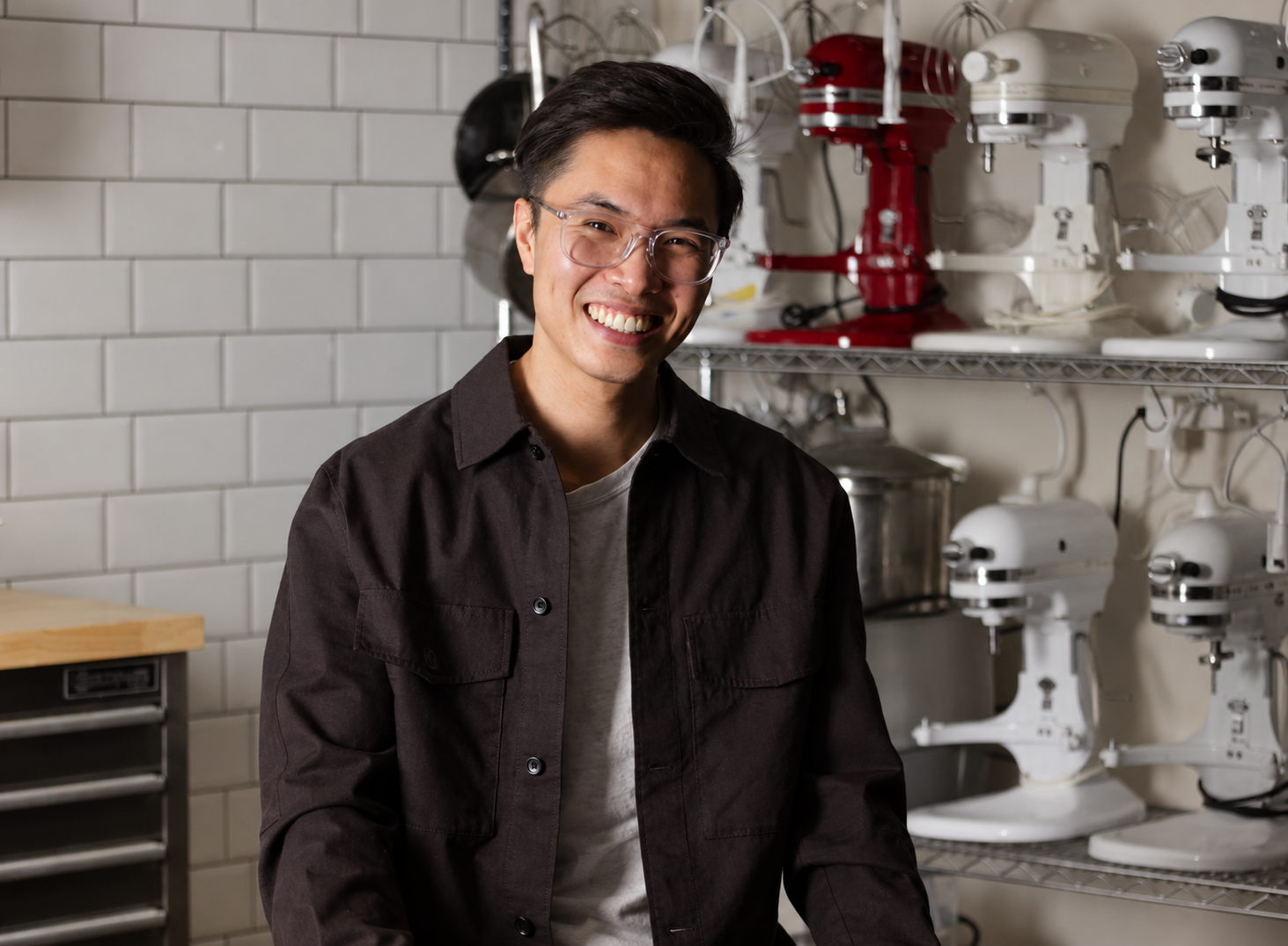
At ten years old, Sam mixed flour, sugar, eggs, baking powder and water, poured everything into a pan, and placed it in a friend's toaster oven.
The cake was, by Sam's own admission, awful. But the failure did not end the experiment. It started one.
“Since then, I really got into the science of baking,” Sam recalls. “I love science.”
That curiosity would eventually become Heis Kitchen Studio, a Filipino cake and pastry business in Panmure, Auckland. Yet the journey from that first improvised cake to a physical kitchen was neither quick nor straight. It stretched across migration, study, employment, faith, setbacks, recipe testing and years of waiting.
A Childhood Surrounded by Good Cooks
Sam grew up in Pampanga, where food was woven into family and community life. During fiestas, the kitchen filled with lolas, great-aunts and grand-aunts preparing food. Even at seven or eight years old, Sam wanted to be close to the action.
“Nakikialam na ako sa kitchen,” Sam says—a childhood habit of watching, asking and joining in that preserved details others might have forgotten.
One of those memories was a grand-aunt preparing lechon sarsa. There was no written recipe. Sam remembers the stone mortar and pestle, the pork liver being ground, and the liquid being carefully extracted. Years later in New Zealand, Sam tried to recreate it.
When the result was shared with the aunt and uncle who were the grand-aunt's children, the memory moved them to tears. It was proof that a recipe can travel across generations and oceans, even when it was never written down.
Learning a New Country
Sam moved to New Zealand at around 17 or 18, shortly after finishing high school. The family arrived in November, but the New Zealand spring felt cold to newcomers from the tropics. Friends went to the beach in shorts and sandals; Sam's family arrived in jackets and jumpers.
The accent was an even bigger adjustment. Although the family spoke English, they had learned it in the American style used in the Philippines. When the home phone rang during their first months in New Zealand, nobody wanted to answer because the Kiwi accent was difficult to understand.
That awkward beginning eventually became part of a much larger transition: finding a place in a new country while carrying the tastes, memories and ambitions of home.
When Ube Became a Taste of Home
Ironically, ube was not especially important to Sam while living in the Philippines.
“If it's abundant in your place, you don't look for it.”
In New Zealand, where ube was harder to find, the familiar flavour became something to crave. After taking baking classes in the Philippines, Sam began adapting Filipino recipes to ingredients available locally in New Zealand. The ube cake recipe was tested, converted and refined over many years.
Today, ube cake is the best-seller at Heis. It is also one of the clearest expressions of the business: Filipino flavour shaped by migration, made with what is available in Aotearoa, and shared with a wider community.
A Business Rooted in Faith
For Sam, the story of Heis cannot be separated from faith.
The name came during a Christian conference in Sydney, after years of wondering whether the childhood dream of owning a business would ever happen. Sam says the words “He is” were impressed upon the heart—a reference to God and Jesus as the foundation of the venture.
The name often starts conversations with customers and students. However people pronounce it, Sam says what matters is that the conversation points back to the source of the business.
Faith also shaped the timing. For years, Sam resisted a strong conviction to attend Bible school, believing it had little to do with becoming an entrepreneur. Looking back, Sam now sees those years as essential preparation for the uncertainty and pressure of running a business.
“It has actually everything to do with where I'm at now,” Sam says. “If there's a regret, I should have just obeyed sooner.”
The Decision to Begin
The pandemic became a turning point. Seeing people lose livelihoods—and, in some cases, loved ones—made delay feel more costly.
“Life is too short,” Sam remembers thinking. “Why not give this a start?”
After years of home baking and recipe testing, the dream became a serious pursuit. The business was formally registered only a few years ago, but Sam rejects the idea that its progress came quickly.
“This is 20 years in the making. It was not an overnight success.”
Behind the visible shop were two decades of refining recipes, working different jobs, learning, praying, being disappointed and starting again.
Growing Means Learning to Trust
Raising capital was one of the earliest and hardest challenges. Sam and the team made detailed plans before the money was available, preparing to act when the opportunity arrived.
Then came a different challenge: hiring people and trusting them with the recipes. At first, Sam considered dividing production so no employee would know an entire recipe. But keeping every critical process centred on one person created a bottleneck.
Growth required trust. Sam chose to share knowledge with the team and credits the business with being blessed by dependable staff. One employee became several. More people required more mixers, more ovens and eventually a larger facility.
Increase, Not Shrink
When bills rise, equipment is needed or a larger space becomes necessary, the instinct can be to retreat. Heis adopted a different question: how can the business increase sales enough to meet the next need?
“The mindset is increase, not shrink,” Sam says.
That does not mean ignoring risk. It means refusing to make fear the strategy. Instead of asking how to make the dream smaller, the team asks how to build the capacity, sales and systems needed for the next stage.
The approach reflects the same persistence that began with an inedible toaster-oven cake in Pampanga. Keep learning. Refine the recipe. Face the next problem. Do not mistake a difficult stage for the end of the story.
Heis Kitchen Studio may now be known for ube, pandan and delicately balanced cakes, but its deeper product is patience: the kind measured not in baking minutes, but in decades.
“Quitting is never an option for us.”